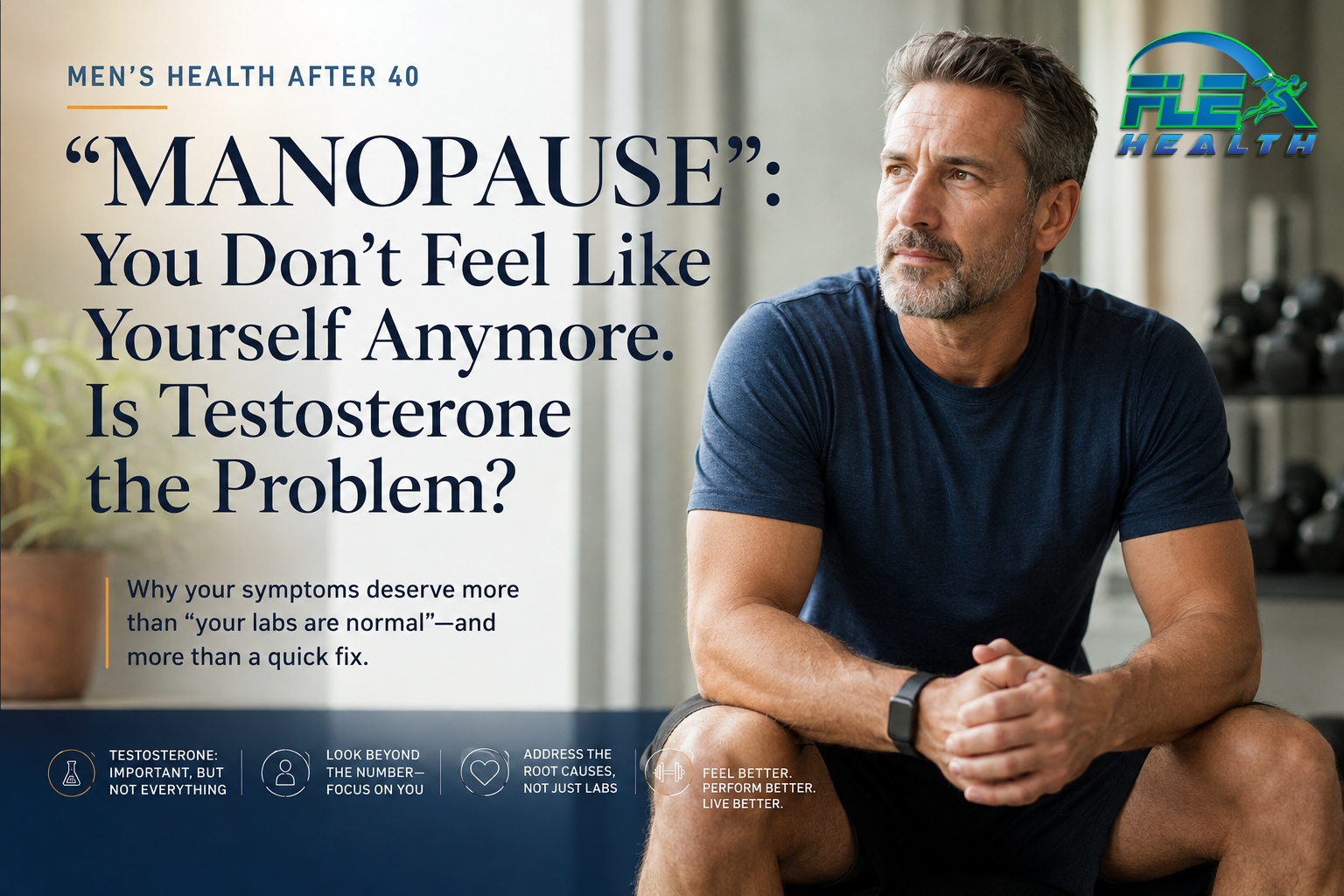
“I don’t feel terrible. I just don’t feel like myself anymore.”
I hear some version of this from men in their 40s, 50s, and beyond.
Maybe you have gained 15 pounds, most of it around your waist. Workouts that once energized you now leave you sore for days. You aren’t sleeping as well. Your motivation has slipped. You have less interest in sex, or your erections aren’t as predictable as they used to be. You may feel mentally slower, physically weaker, or simply less driven. And yet your annual physical may have produced a reassuring message: “Everything looks normal.” Perhaps your testosterone was checked and landed somewhere inside the laboratory’s reference range. Maybe it wasn’t checked at all.
So what now? One popular explanation is “manopause,” sometimes called male menopause. Search online and you’ll quickly encounter a second term: low T. But the truth is more complicated, and more useful. Manopause is not a formal medical diagnosis, and it isn’t the male equivalent of female menopause. Men generally do not experience the relatively abrupt reproductive hormonal transition that women experience during menopause. Testosterone levels tend to change much more gradually, and age is only one factor influencing them. Still, the word manopause has caught on because it describes something many men recognize: at some point in midlife, they notice meaningful changes in energy, strength, body composition, sexual function, sleep, recovery, mood, or performance. Those changes should not automatically be blamed on testosterone. But they shouldn’t automatically be dismissed as “just getting older,” either.
The most useful question isn’t: “Do I have manopause?”
It’s: “Why don’t I feel like myself anymore?”
And answering that question requires looking at much more than one hormone level.
What Happens to Testosterone After 40?
Testosterone is sometimes reduced to being the “sex hormone,” but its physiology extends well beyond libido. In men, testosterone contributes to sexual desire and reproductive function, muscle mass and strength, bone health, red blood cell production, and body composition. Testosterone deficiency can also be associated with reduced energy, changes in mood, and other symptoms. (Endocrine Society)
Testosterone levels often decline with age, but aging doesn’t occur in isolation. Levels can also be affected by obesity, metabolic disease, acute or chronic illness, sleep disorders, medications, including opioids and glucocorticoids, and nutritional factors. Testosterone concentrations also fluctuate naturally and can vary based on the time of day and circumstances surrounding testing. (Endocrine Society)
This matters because it challenges a very popular story about testosterone after 40: You’re getting older → testosterone falls → testosterone causes your symptoms → replacing testosterone fixes aging. Human physiology isn’t that simple. Consider abdominal obesity. A man gains visceral fat, becomes less active, develops insulin resistance, starts sleeping poorly, and perhaps develops obstructive sleep apnea. His testosterone may decline at the same time. Which came first? Sometimes that is the wrong question. These factors can interact. Obesity and its associated health problems can reduce measured testosterone concentrations. Conversely, genuine testosterone deficiency can adversely affect muscle and body composition. Recent endocrine literature particularly emphasizes that modest testosterone reductions associated with obesity may sometimes reflect a reversible physiologic state rather than permanent disease of the testes or pituitary. (OUP Academic) That distinction matters enormously. Treating a number without understanding why it changed can mean treating the wrong problem.
Low T Symptoms: Symptoms Are Signals, Not Diagnoses
Search for low testosterone symptoms and you will find a familiar list:
- reduced libido
- erectile changes
- fatigue
- declining strength
- loss of muscle mass
- increased abdominal fat
- reduced exercise performance
- slower recovery
- difficulty concentrating or “brain fog”
- decreased motivation
- mood changes
- poor sleep
These symptoms are real. But most are not specific to testosterone deficiency. Fatigue could be related to inadequate sleep, sleep apnea, anemia, thyroid disease, depression, medication effects, metabolic disease, excessive training, inadequate recovery, or testosterone deficiency.
Erectile dysfunction can involve testosterone, but it can also be related to vascular disease, diabetes, medications, psychological factors, relationship issues, or other causes. In fact, erectile dysfunction can sometimes be an important clue to underlying cardiovascular or metabolic health rather than simply a testosterone problem.
Loss of strength could involve hormonal changes. It could also reflect years of progressively less resistance training, inadequate protein or calories, chronic illness, or simply deconditioning.
That doesn’t mean we should dismiss these symptoms because they are “nonspecific.” It means we should investigate them intelligently. A thoughtful physician should be asking:
“What could be causing this?” That is very different from immediately concluding:
“You need testosterone.” But it’s also different from saying:
“Your testosterone is normal. Nothing is wrong.” Both approaches can stop the investigation too early.
Normal Doesn’t Always Answer the Question
One of the most frustrating experiences in medicine is being told that nothing is wrong simply because a laboratory report doesn’t contain a red number. Laboratory reference ranges are important. But they aren’t diagnoses.
For perspective, research used to establish harmonized testosterone reference ranges found a total testosterone range of approximately 264–916 ng/dL in healthy, nonobese men ages 19–39 using standardized measurements. Different assays and laboratories can have different reference intervals. (OUP Academic) The American Urological Association has historically used a total testosterone level below 300 ng/dL as a reasonable cutoff supporting the diagnosis of testosterone deficiency, while the Endocrine Society emphasizes both compatible symptoms/signs and unequivocally and consistently low testosterone concentrations. (American Urological Association)
That last part is important.
A testosterone number doesn’t exist in a vacuum.
If testosterone deficiency is genuinely suspected, proper evaluation may include considering:
- the symptoms that prompted testing
- when the blood was drawn
- whether an unexpectedly low measurement has been repeated
- total testosterone
- free testosterone when clinically appropriate
- sex hormone-binding globulin (SHBG) in situations where it may affect interpretation
- LH and FSH when indicated to help determine the source of deficiency
- medications
- acute and chronic medical conditions
- previous testosterone values
- reproductive and fertility goals
- the broader clinical picture
The Endocrine Society recommends confirming suspected hypogonadism by repeating a morning fasting total testosterone measurement and investigating the cause when androgen deficiency is identified. (Endocrine Society) There is an equally important warning on the other side, however.
Being symptomatic with a testosterone level somewhere toward the lower end of a reference interval does not automatically mean that you have testosterone deficiency or need TRT. There is no scientifically established universal “optimal testosterone” number that every man should be pushed toward. That’s where some hormone-optimization marketing gets ahead of the evidence.
Reference ranges matter, but medicine requires interpretation, not simply deciding whether a number appears red or green on a laboratory report.
Before You Blame Testosterone, Look at the Whole Man
When a man tells me that he has lost energy, gained abdominal fat, stopped recovering from exercise, sleeps poorly, or has experienced sexual changes, testosterone deserves consideration. So do several other things. Not every patient needs every test. The evaluation should be guided by the individual’s history, symptoms, examination, risk factors, and previous results. But here are some of the questions worth considering.
How Are You Sleeping?
Chronic sleep deprivation can affect energy, cognition, exercise recovery, appetite, metabolic health, sexual function, and hormonal physiology. Obstructive sleep apnea deserves particular attention, especially in men who snore, have gained weight, have resistant hypertension, experience daytime sleepiness, or wake feeling unrefreshed. A testosterone prescription cannot substitute for restorative sleep.
What Has Happened to Your Body Composition?
Visceral adiposity is not simply cosmetic. Increasing abdominal fat is associated with insulin resistance, cardiovascular risk, inflammation, sleep apnea, and alterations in reproductive hormone physiology. And the relationship with testosterone can become circular. Poor metabolic health can contribute to lower testosterone. Lower testosterone in genuine hypogonadism can contribute to unfavorable changes in muscle and fat. The goal is to understand which processes are operating in you.
How Are You Training?
Muscle doesn’t disappear simply because a man turns 45. But maintaining it requires a reason for the body to keep it. For many men, resistance training gradually becomes less consistent during the busiest decades of life. Others train hard but recover poorly. At the opposite extreme, aggressive endurance training combined with insufficient caloric intake or inadequate recovery can also affect energy, performance, and reproductive physiology. Training history matters.
Are You Eating Enough….or Too Much?
Both chronic caloric excess and aggressive caloric restriction can create problems. Nutrition should be considered in the context of body composition, metabolic health, activity level, training goals, protein intake, alcohol consumption, and overall energy balance.
What Medications Are You Taking?
Medications can contribute to fatigue, sexual dysfunction, changes in weight, and hormonal abnormalities. Opioids and glucocorticoids are particularly relevant when evaluating testosterone physiology, but the entire medication list deserves review. (Endocrine Society)
What About the Rest of Your Health?
Depending on the individual, fatigue, reduced performance, sexual changes, or diminished well-being may warrant consideration of:
- thyroid disease
- anemia
- insulin resistance or diabetes
- cardiovascular disease
- depression
- chronic stress or burnout
- alcohol use
- relationship or sexual-health issues
- chronic illness
- age-related deconditioning
The answer is not to order every conceivable laboratory test. The answer is to develop a hypothesis based on the individual sitting in front of you, and test that hypothesis thoughtfully.
What About Testosterone Replacement Therapy?
There is a strange polarization surrounding testosterone replacement therapy (TRT). One camp portrays testosterone almost as a universal solution for aging. Another treats testosterone therapy as inherently reckless. Neither position reflects the evidence particularly well.
For appropriately selected men with confirmed testosterone deficiency, testosterone replacement is a legitimate medical therapy. The Endocrine Society recommends testosterone treatment for men with diagnosed hypogonadism when appropriate to correct symptoms and physiologic consequences of testosterone deficiency. (Endocrine Society) But TRT should follow an appropriate evaluation. It shouldn’t replace one.
What can TRT realistically accomplish?
Benefits depend on why testosterone is low, the severity of deficiency, symptoms, age, underlying disease, and the individual patient. Sexual symptoms have some of the clearest evidence.
For men specifically with age-related low testosterone, the American College of Physicians concluded that testosterone produces relatively small improvements in sexual and erectile function and recommended against initiating therapy simply to improve energy, vitality, physical function, or cognition. (PubMed)
That is an important reality check for anyone being promised that TRT will automatically restore the body and energy of a 25-year-old.
Fertility must be discussed before TRT.
This point deserves more attention than it often receives. Taking testosterone from outside the body suppresses signaling from the brain to the testes. As a result, sperm production can decrease substantially or even stop. The AUA and American Society for Reproductive Medicine advise against prescribing exogenous testosterone to men interested in current or future fertility. Recovery after discontinuation often occurs, but it can take months and occasionally much longer. (American Urological Association) If future fertility matters, that conversation needs to happen before treatment begins.
Hematocrit requires monitoring.
Testosterone can stimulate red blood cell production and produce erythrocytosis. The AUA recommends measuring hemoglobin and hematocrit before testosterone therapy and monitoring during treatment; significant treatment-related elevations require intervention. (American Urological Association)
Prostate health matters, too.
Testosterone therapy does not mean that a man will develop prostate cancer. But prostate risk should be assessed appropriately before and during treatment based on age, risk, symptoms, PSA, and shared decision-making. AUA guidance recommends baseline PSA measurement in men over 40 before beginning testosterone therapy. (American Urological Association)
And what about the heart?
This conversation has changed significantly in recent years. The large randomized TRAVERSE trial studied 5,246 men ages 45–80 with symptoms of hypogonadism, two fasting testosterone concentrations below 300 ng/dL, and preexisting cardiovascular disease or elevated cardiovascular risk. Testosterone therapy was noninferior to placebo for major adverse cardiovascular events, cardiovascular death, nonfatal heart attack, or nonfatal stroke, during the study’s follow-up. (New England Journal of Medicine)
Based partly on TRAVERSE, the FDA announced in 2025 that it was removing boxed-warning language concerning increased cardiovascular outcomes from testosterone product labeling. At the same time, the FDA required labeling about increased blood pressure based on ambulatory blood-pressure studies and retained limitations regarding testosterone use for age-related hypogonadism. (U.S. Food and Drug Administration) That does not mean TRT has been proven cardiovascularly beneficial or universally safe.
TRAVERSE also found higher incidences of atrial fibrillation, acute kidney injury, and pulmonary embolism in the testosterone group. Subsequent analysis also found more clinical fractures among testosterone-treated participants rather than fewer. (New England Journal of Medicine)
In a 2026 statement reviewing contemporary evidence, the Endocrine Society emphasized essentially this nuance: appropriately diagnosed patients can benefit from TRT, but clinicians still need to weigh benefits against risks and address reversible contributors. (Endocrine Society)
That’s what informed consent should look like. Not fear. Not hype. Context.
The Goal Isn’t the Highest Testosterone Number
One of the easiest mistakes in hormone medicine is turning treatment into a competition with a laboratory value. The goal isn’t to see how high we can make testosterone. It’s to improve the patient’s health. That means asking questions such as:
Are the symptoms we intended to treat actually improving?
Is sexual function better?
Is body composition improving?
Is strength improving?
Are there adverse effects?
Is hematocrit rising excessively?
Are we monitoring prostate health appropriately?
Have we addressed sleep, metabolic disease, exercise, nutrition, medications, and cardiovascular risk?
And perhaps most importantly:
Is this man’s life actually better because of what we’re doing?
If the answer is no, simply escalating treatment to chase a higher testosterone level doesn’t necessarily make sense.
Testosterone Can Be the Doorway to a Much Bigger Men’s Health Conversation
There is another reason I don’t mind when a man comes into the office asking about testosterone. It gets him into the office. Many men will tolerate declining health for years before seeking care. But decreased libido, erectile dysfunction, abdominal weight gain, or lost strength finally gets their attention. Good. Now let’s talk. Because the most important finding from that appointment may not ultimately be testosterone.
A comprehensive approach to men’s health after 40 may include evaluating:
- blood pressure
- cholesterol, ApoB, and overall cardiovascular risk
- glucose regulation and metabolic health
- visceral adiposity and body composition
- muscle mass and strength
- cardiovascular fitness and physical activity
- sleep and possible sleep apnea
- alcohol and tobacco exposure
- sexual health
- mental health and chronic stress
- family history
- age- and risk-appropriate cancer screening
A man who arrives worried about low T symptoms may discover untreated hypertension.
Or significant insulin resistance.
Or sleep apnea.
Or cardiovascular risk that hasn’t been adequately addressed.
Or declining muscle mass after a decade without meaningful resistance training.
Or genuine testosterone deficiency.
Sometimes several of these are present simultaneously. That is why testosterone is better viewed as one component of men’s health rather than the definition of men’s health.
Men Deserve Better Than the Two Extremes
There are two approaches to this problem that concern me. The first is the clinic where nearly every tired 45-year-old man somehow leaves with the same diagnosis and the same prescription.
Your energy is down? Testosterone.
You’ve gained weight? Testosterone.
You’re stressed? Testosterone.
Your libido changed? Testosterone.
You’re getting older? Testosterone.
Human physiology is more complicated than that. But the opposite extreme isn’t good medicine either. That’s the man who knows that something meaningful has changed. He has less energy. His waist circumference is increasing. His sexual function has changed. His workouts aren’t going well. His motivation is different. He finally asks for help. A few laboratory tests come back without red flags. And he’s told:
“Everything is normal. You’re just getting older.”
That may be reassuring to the clinician. It isn’t necessarily an explanation. Men deserve something better than a testosterone clinic that sees testosterone as the answer to everything and a healthcare system that concludes everything must be fine because the numbers aren’t red. Good medicine occupies the space between those extremes.
It listens to the patient.
It takes symptoms seriously without assuming their cause.
It measures what is appropriate.
It interprets those measurements intelligently.
It looks for reversible contributors.
It treats genuine disease.
And when treatment, including testosterone, is appropriate, it monitors whether that treatment is actually making the patient’s health and life better.
If You Don’t Feel Like Yourself Anymore, Start There
Perhaps the most important thing to understand about “manopause” is that you don’t need to decide whether you have it. You need to recognize when something has changed. Maybe testosterone is part of the explanation. Maybe it isn’t. Often, several things are happening at once.
But meaningful changes in your energy, strength, body composition, sexual function, sleep, exercise capacity, mood, or cognition deserve a thoughtful conversation. Getting older is inevitable. Feeling progressively worse without asking why shouldn’t be. And while a laboratory reference range provides valuable information, “your labs are normal” should not automatically be the end of the investigation when the clinical story suggests that something has meaningfully changed.
The objective isn’t to turn every middle-aged man into a testosterone patient. It’s to figure out what is actually happening—and identify what can realistically be improved.
A Better Starting Question
So if you find yourself saying: “I don’t feel terrible. I just don’t feel like myself anymore,” tell your physician exactly that. Then start asking better questions:
What has changed?
When did it change?
Could sleep be contributing?
Has my body composition changed?
What is happening metabolically?
Could medications be involved?
Does my sexual health tell us something?
Does testosterone testing make sense in my situation?
And if testosterone is abnormal, why?
Those questions are far more valuable than asking whether you’ve entered “manopause.”
Frequently Asked Questions About Manopause and Low Testosterone
Is manopause a real medical condition?
“Manopause” or “male menopause” is not a formal medical diagnosis, and it is not biologically equivalent to menopause in women. The term is useful mainly because it describes the cluster of physical, sexual, and psychological changes some men notice during midlife. The medical task is determining what is actually causing those changes.
What are the most common low T symptoms?
Symptoms associated with testosterone deficiency can include decreased libido, erectile changes, reduced spontaneous erections, decreased muscle mass, reduced energy, fertility problems, and mood or concentration changes.
But many of these symptoms are nonspecific. Sleep disorders, obesity, metabolic disease, medications, depression, cardiovascular disease, and other medical problems can produce similar complaints. (Endocrine Society)
Should every man have testosterone testing after 40?
No.
The Endocrine Society recommends against routine population screening for testosterone deficiency. Testing makes more sense when symptoms, signs, medical conditions, medications, or other clinical circumstances raise reasonable suspicion of hypogonadism. (Endocrine Society)
What is considered a low testosterone level in men?
There isn’t one number that should be interpreted independently of the patient and testing conditions.
The AUA has used total testosterone below 300 ng/dL as a reasonable diagnostic cutoff, while Endocrine Society guidance emphasizes symptoms plus unequivocally and consistently low testosterone measured with accurate assays. Unexpectedly low results generally require confirmation rather than diagnosis from a single measurement. (Endocrine Society)
My testosterone is “normal,” but I have symptoms. Does that mean nothing is wrong?
No.
It means testosterone deficiency may or may not explain your symptoms. The next step isn’t automatically TRT, but it also isn’t automatically dismissal. Your physician may need to consider sleep, metabolic health, cardiovascular health, thyroid function, anemia, medications, psychological health, exercise, nutrition, sexual health, or other factors depending on your individual situation.
The symptom deserves an explanation even when the eventual explanation isn’t testosterone.
Is testosterone replacement therapy safe?
TRT has recognized benefits and risks and should be individualized. The TRAVERSE trial provides important reassurance that appropriately prescribed testosterone did not increase the primary rate of major cardiovascular events compared with placebo in men with confirmed hypogonadism and existing or elevated cardiovascular risk. However, other adverse events were more frequent in the testosterone group, and testosterone still requires appropriate selection and monitoring. (New England Journal of Medicine)
Will TRT make me feel 25 again?
That isn’t a realistic medical promise. Men with genuine testosterone deficiency may experience meaningful benefits from appropriate treatment. But evidence does not support testosterone as a universal treatment for fatigue, cognitive decline, reduced physical performance, or aging itself.
If poor sleep, visceral obesity, metabolic disease, chronic stress, medication effects, or deconditioning are major contributors to how you feel, raising testosterone alone won’t address the entire problem.
Comprehensive Men’s Health at Flex Health
If you’ve noticed meaningful changes in how you feel or function, you don’t need to arrive at the appointment already convinced that you have low testosterone. You simply need a physician willing to ask why things have changed.
At Flex Health, our approach to men’s health is broader than prescribing TRT or checking whether laboratory values fall inside a reference range. We look at symptoms in the context of hormone health, cardiovascular and metabolic risk, body composition, sleep, sexual health, physical performance, medications, lifestyle, and your long-term goals.
Sometimes testosterone is an important part of that conversation.
Sometimes it isn’t.
The objective is the same either way: understand what has changed, identify what is driving it, and determine what can safely and realistically be improved.
SEO Meta Information
Meta Title: Manopause & Low Testosterone After 40: What Men Should Know | Flex Health
Meta Description: Feeling tired, weaker, or less like yourself? Learn how manopause, low testosterone, sleep, metabolism and men’s health after 40 may be connected.
References and Further Reading
- Endocrine Society. Testosterone Therapy for Hypogonadism Guideline Resources. Diagnosis requires compatible symptoms/signs plus unequivocally and consistently low testosterone; morning fasting measurements should be repeated for confirmation. (Endocrine Society)
Endocrine Society guideline - Bhasin S, et al. Testosterone Therapy in Men With Hypogonadism: An Endocrine Society Clinical Practice Guideline. Journal of Clinical Endocrinology & Metabolism. 2018. (OUP Academic)
Read the guideline in JCEM - American Urological Association. Evaluation and Management of Testosterone Deficiency: AUA Guideline. Includes guidance regarding diagnostic evaluation, hematocrit and PSA monitoring. (American Urological Association)
AUA testosterone-deficiency guideline - Qaseem A, et al. Testosterone Treatment in Adult Men With Age-Related Low Testosterone: A Clinical Guideline From the American College of Physicians. Annals of Internal Medicine. 2020;172:126–133. (PubMed)
ACP guideline via PubMed - Lincoff AM, et al. Cardiovascular Safety of Testosterone-Replacement Therapy. New England Journal of Medicine. 2023;389:107–117. The TRAVERSE cardiovascular-safety trial. (New England Journal of Medicine)
TRAVERSE trial in NEJM - Snyder PJ, et al. Testosterone Treatment and Fractures in Men with Hypogonadism. New England Journal of Medicine. 2024. (New England Journal of Medicine)
TRAVERSE fracture study - U.S. Food and Drug Administration. FDA Issues Class-Wide Labeling Changes for Testosterone Products. February 28, 2025. The FDA removed boxed-warning language concerning increased cardiovascular outcomes while requiring blood-pressure labeling changes and retaining limitations concerning age-related hypogonadism. (U.S. Food and Drug Administration)
FDA testosterone labeling update - American Urological Association/American Society for Reproductive Medicine. Diagnosis and Treatment of Infertility in Men Guideline. Amended 2024. Exogenous testosterone should not be prescribed to men pursuing current or future fertility because of suppression of spermatogenesis. (American Urological Association)
- Endocrine Society. Statement on Testosterone Replacement Therapy. 2026. Contemporary discussion of appropriate diagnosis, reversible contributors, benefits, and remaining uncertainties surrounding TRT. (Endocrine Society)
2026 Endocrine Society statement
This article is for educational purposes and is not intended to diagnose testosterone deficiency or provide individualized medical advice.