
Introduction: The Pressure to Specialize Early
Youth sports have changed dramatically over the past two decades. What was once seasonal and recreational has evolved into a highly structured, year-round commitment for many children. Parents are often told—directly or indirectly—that if their child does not specialize early in a single sport, they risk falling behind.
At first glance, this idea seems logical. Repetition improves skill, and more time invested should theoretically lead to better performance. But when we step back and examine the evidence, the relationship between early specialization and long-term success becomes far less convincing.
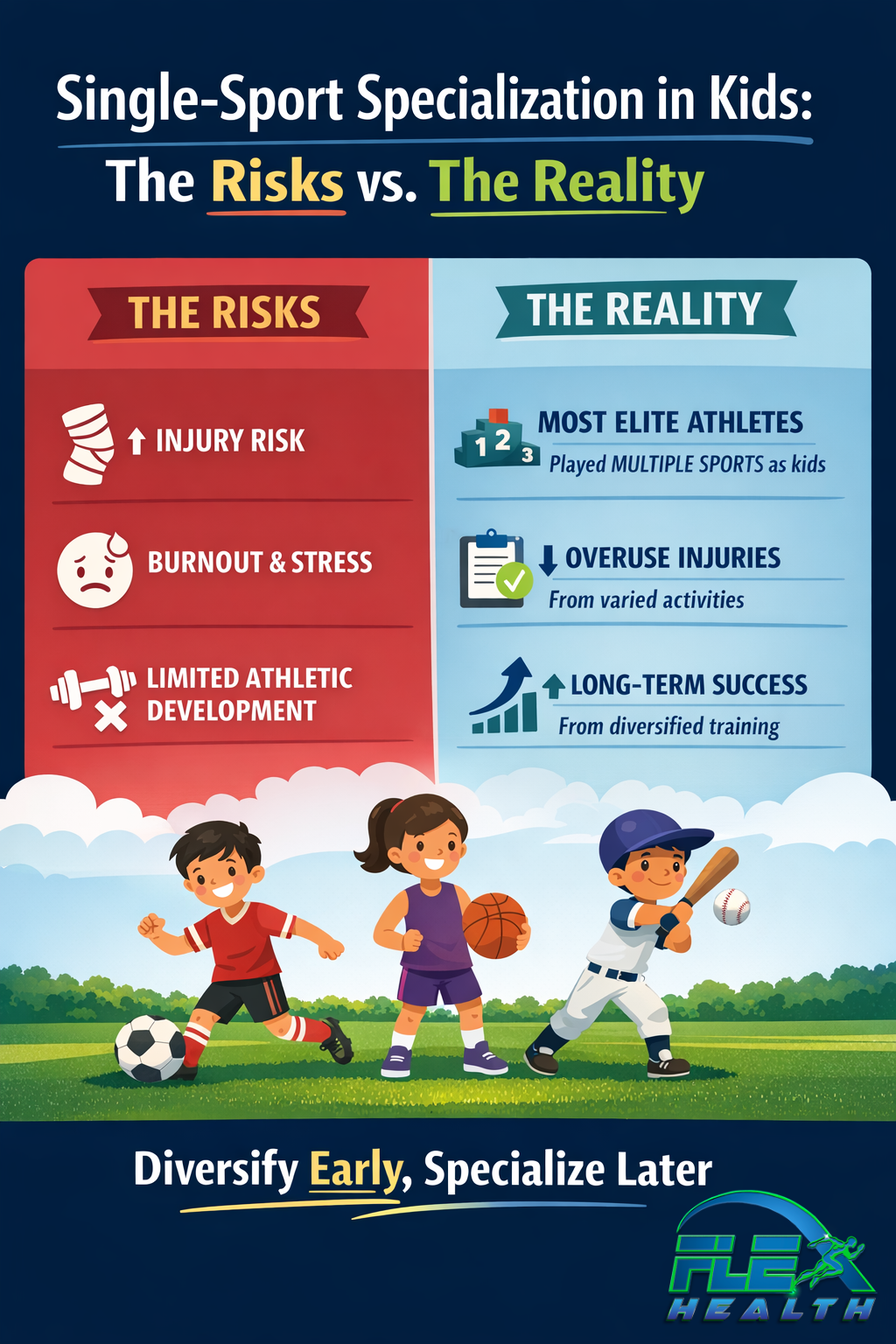
In fact, a growing body of peer-reviewed research suggests that early single-sport specialization may increase the risk of injury, burnout, and even limit long-term athletic development. For most children, specializing too early may do more harm than good.
What Is Single-Sport Specialization?
Single-sport specialization is typically defined as intensive, year-round participation in one sport—usually for more than eight months per year—while excluding other athletic activities. This often includes travel teams, private coaching, and structured training schedules with minimal downtime.
While this approach may appear to accelerate development, it assumes that children benefit from the same training models as adults. That assumption does not fully account for the unique physiological and psychological needs of growing athletes.
The Assumptions Behind Early Specialization—And Why They Fall Short
A common belief among parents is that early specialization is necessary to achieve elite performance. However, this assumption is not strongly supported by evidence.
A landmark review by Jayanthi et al. (2013) found that most elite athletes did not specialize early and instead participated in multiple sports during childhood before focusing on one later in adolescence. This model—known as early diversification—has been associated with better long-term performance and fewer injuries.
Another important consideration is survivorship bias. We tend to focus on the small number of athletes who succeed through early specialization while overlooking the many who experience injuries, burnout, or dropout. This creates a misleading narrative that early specialization is the path to success when, in reality, it may only appear that way.
The Evidence: Risks of Early Specialization
Increased Risk of Overuse Injuries
One of the most consistent findings in pediatric sports medicine is the link between early specialization and overuse injuries.
A study published in The American Journal of Sports Medicine found that highly specialized young athletes were more than twice as likely to sustain serious overuse injuries compared to those who played multiple sports (Jayanthi et al., 2015). These injuries include stress fractures, tendinitis, and growth plate injuries.
Children are particularly vulnerable because their growth plates are still open. Repetitive stress without adequate recovery can lead to long-term damage, sometimes requiring prolonged rest or even ending athletic participation altogether.
From a clinical perspective, this raises a critical question: if the goal is long-term performance, why adopt a strategy that significantly increases the risk of interruption?
Burnout and Psychological Stress
Early specialization is also associated with higher rates of burnout. A study in Orthopaedic Journal of Sports Medicine highlighted that athletes who specialize early are more likely to experience emotional exhaustion, reduced enjoyment, and eventual withdrawal from sports (DiFiori et al., 2014).
When training becomes overly structured and performance-focused at a young age, it can undermine intrinsic motivation. What starts as a passion can quickly become a source of stress.
A skeptical interpretation would be this: if early specialization were truly beneficial, we would expect it to improve both performance and retention. Instead, we often see increased dropout rates.
Reduced Long-Term Athletic Development
Early specialization may also limit the development of fundamental movement skills. Multi-sport participation exposes children to a wide range of physical demands, improving coordination, agility, and overall athleticism.
A review in Sports Health emphasized that diversified early training enhances neuromuscular development and may actually lead to superior performance later in a single sport (Myer et al., 2015).
In other words, specializing too early may narrow a child’s athletic ceiling rather than expand it.
When Is Specialization Appropriate?
There are exceptions. Certain sports—such as gymnastics and figure skating—often require early specialization due to earlier peak performance ages. Even in these cases, however, careful attention must be paid to training load, injury prevention, and mental health.
For most team and endurance sports, including soccer, basketball, and baseball, early specialization is not necessary for elite success.
Practical, Evidence-Based Recommendations for Parents
A more balanced approach aligns better with both the data and long-term athlete development models.
Children should be encouraged to participate in multiple sports through early adolescence. This not only reduces injury risk but also supports broader skill development.
Training volume should be age-appropriate. A widely accepted guideline is that weekly hours of organized sport should not exceed the child’s age. This helps prevent overuse injuries while allowing time for rest and recovery.
Rest is essential, not optional. Young athletes should have at least one to two days off per week from organized sports and take two to three months off per year from any single sport.
Parents should also monitor for early warning signs of overtraining, including persistent pain, fatigue, irritability, and decreased performance. These signs often precede more serious physical or psychological issues.
Rethinking Success in Youth Sports
Many families pursue early specialization with the goal of securing college scholarships or professional opportunities. However, the statistical likelihood of these outcomes is quite low. According to NCAA data, only a small percentage of high school athletes compete at the collegiate level, and fewer still receive scholarships.
This doesn’t diminish the value of sports. Instead, it reframes the goal. Youth sports should prioritize long-term health, enjoyment, and personal development rather than early performance optimization.
Conclusion: The Smarter Path Forward
Early single-sport specialization in children under 18 is often driven by good intentions but flawed assumptions. The evidence consistently shows increased risks of injury and burnout, with no clear advantage in long-term performance for most athletes.
A more effective approach is to delay specialization, encourage variety, and prioritize sustainability. Children who develop broadly tend to remain healthier, enjoy sports longer, and ultimately perform better when they do choose to specialize.
The goal is not to do more, earlier—but to develop better, over time.
Peer-Reviewed References
- Jayanthi N, Pinkham C, Dugas L, Patrick B, LaBella C.
Sports specialization in young athletes: evidence-based recommendations.
Sports Health. 2013;5(3):251–257. - Jayanthi N, LaBella C, Fischer D, Pasulka J, Dugas L.
Sports-specialized intensive training and the risk of injury in young athletes.
Am J Sports Med. 2015;43(4):794–801. - DiFiori JP, Benjamin HJ, Brenner JS, et al.
Overuse injuries and burnout in youth sports: a position statement.
Orthop J Sports Med. 2014. - Myer GD, Jayanthi N, DiFiori JP, et al.
Sports specialization, part I: does early specialization increase negative outcomes?
Sports Health. 2015;7(5):437–442. - American Academy of Pediatrics Council on Sports Medicine and Fitness.
Sports specialization and intensive training in young athletes.
Pediatrics. 2016;138(3):e20162148.