By Flex Health | November 2026 | Approximately 8-minute read
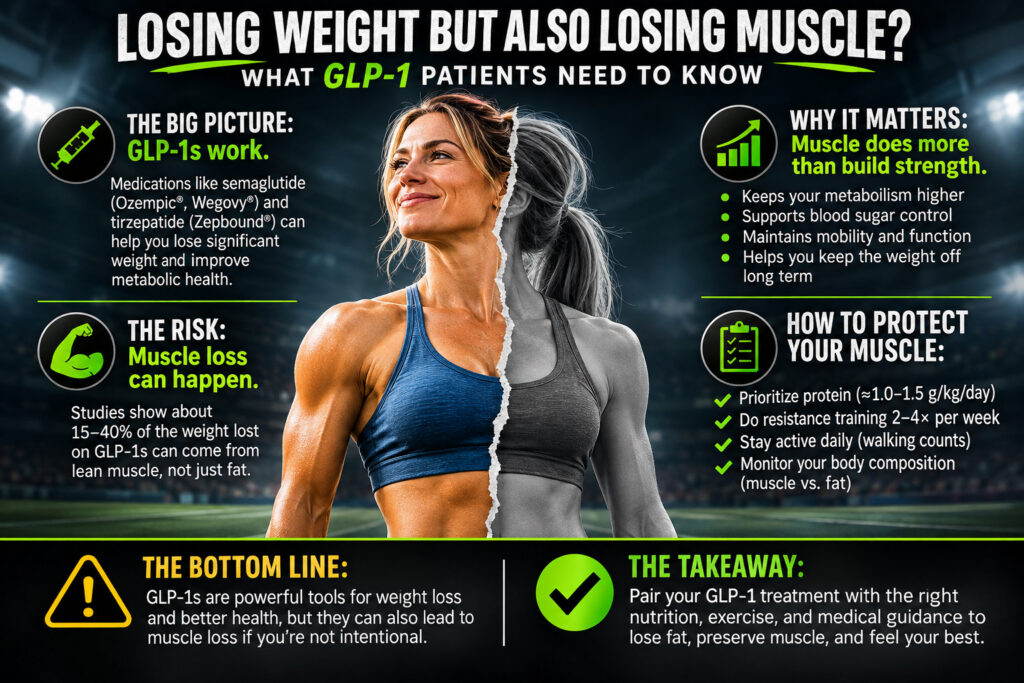
The number on your scale is dropping. Your clothes fit better. You may even be feeling healthier than you have in years. But there’s an important question that often gets overlooked during weight loss: Are you losing fat, muscle, or both?
Medications such as Ozempic, Wegovy, Mounjaro, and Zepbound have transformed the treatment of obesity. For many patients who have struggled with weight management for years, these medications offer meaningful improvements in weight, blood sugar, and overall metabolic health.
Their popularity continues to grow. According to a 2026 Gallup survey, approximately 11% of American adults reported currently using injectable GLP-1 medications for weight loss, compared with just 3% in 2024.
But as more people experience significant weight loss, physicians are paying closer attention to something that a traditional bathroom scale cannot measure: body composition.
At Flex Health, we believe successful weight management should involve more than reaching a target weight. It should also focus on maintaining muscle, protecting strength, improving physical function, and building habits that support long-term health.
Why Muscle Matters More Than You Think
When most people begin a weight loss program, their primary goal is to lose body fat. That’s understandable. Excess body fat, particularly around the abdominal organs, is associated with insulin resistance, cardiovascular disease, type 2 diabetes, and other metabolic conditions.
However, your body is made up of much more than fat.
Skeletal muscle helps you walk, climb stairs, lift groceries, maintain balance, and participate in the activities you enjoy. It also plays an important role in how your body processes glucose and uses energy.
Muscle is particularly important as we age. Beginning in midlife, many adults gradually lose muscle mass and strength, especially when physical activity declines. This process can accelerate with illness, prolonged inactivity, inadequate nutrition, or substantial weight loss.
For someone in their 40s or 50s, losing muscle during a weight loss program may make it more difficult to maintain strength and physical performance. For an older adult, excessive muscle loss can contribute to frailty, falls, and loss of independence.
There is also a metabolic consideration. Muscle contributes to resting energy expenditure, although its effect is sometimes exaggerated in popular fitness discussions. Preserving muscle can help maintain physical capacity and support healthier weight management over time.
The goal isn’t simply to weigh less. It’s to become healthier, stronger, and more physically capable at your new weight.
Do GLP-1 Medications Actually Cause Muscle Loss?
This is where the science becomes particularly interesting.
GLP-1 medications help reduce appetite, increase feelings of fullness, and make it easier for many patients to consume fewer calories. Tirzepatide also acts on GIP receptors, providing an additional pathway involved in metabolic regulation.
When people lose a substantial amount of weight, they typically lose a combination of fat mass and lean body mass. This happens with traditional dieting, bariatric surgery, and medication-assisted weight loss.
Lean body mass includes muscle, but it also includes water, organs, blood, and other nonfat tissues. Therefore, a reduction in measured lean mass does not necessarily represent an equivalent reduction in actual skeletal muscle.
Research from major GLP-1 clinical trials helps illustrate the issue.
In a body composition analysis from the STEP 1 trial involving semaglutide, participants experienced an average weight reduction of approximately 13.6 kilograms, or 30 pounds. Of that weight loss, approximately 62% came from fat mass and 38% from lean body mass.
In the SURMOUNT-1 trial involving tirzepatide, approximately 75% of weight reduction was attributable to fat mass and 25% to lean mass.
These findings are consistent with broader evidence showing that significant weight loss often includes some reduction in lean tissue.
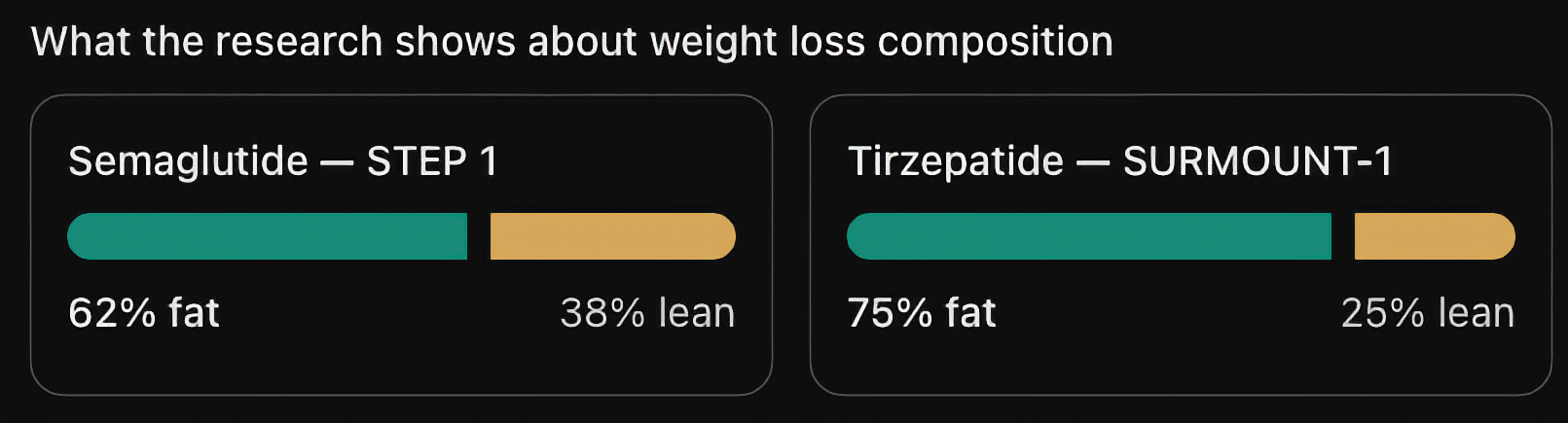
For perspective, imagine someone who loses 40 pounds while taking a GLP-1 medication. If their body composition changes followed a 75% fat-to-25% lean mass pattern, approximately 30 pounds would come from fat and 10 pounds from lean tissue.
That does not mean they lost 10 pounds of skeletal muscle.
It also doesn’t necessarily mean the treatment was harmful. Losing excess body fat can provide substantial health benefits, and some reduction in lean tissue may occur as the body adapts to carrying less weight.
The more clinically important questions are whether the patient is maintaining strength, consuming adequate nutrition, and functioning well throughout treatment.
A 2026 review emphasizes that reductions in lean mass during GLP-1 treatment do not automatically translate into worsening muscle strength or physical performance.
PubMed
The Hidden Problem: Eating Too Little While Losing Weight
One of the biggest advantages of GLP-1 medications is their ability to reduce hunger. However, that same benefit can become a challenge when patients struggle to eat enough nutritious food.
Some patients describe feeling full after only a few bites. Others skip meals because they simply aren’t hungry. Nausea, constipation, or other gastrointestinal side effects can make maintaining adequate nutrition even more difficult.
Consider someone who previously consumed three full meals daily but now eats a small breakfast, skips lunch, and has a few bites of dinner. Their calorie intake may fall dramatically, but so may their intake of protein, vitamins, minerals, and other essential nutrients.
Over time, inadequate nutrition combined with substantial weight loss can make it harder to maintain muscle.
This is particularly concerning when patients are losing weight rapidly, avoiding physical activity, or increasing medication doses despite persistent difficulty eating.
The solution is not necessarily to stop the medication. Instead, it may involve adjusting nutritional intake, managing side effects, modifying the dose or titration schedule when clinically appropriate, and introducing a structured strength-training program.
GLP-1 medications should be part of a comprehensive treatment strategy rather than viewed as a replacement for nutrition and exercise.
How Much Protein Do You Need While Taking a GLP-1?
Protein plays a critical role in preserving and repairing muscle tissue.
When you are losing weight, your body needs enough protein to support muscle maintenance, particularly if you are exercising regularly.
For many adults undergoing weight loss, a reasonable protein target may fall around 1.2–1.6 grams per kilogram of an appropriate reference body weight daily. Individual needs vary based on age, kidney function, physical activity, nutritional status, and other medical conditions.
Importantly, protein goals should not automatically be calculated using a very high current body weight in someone with obesity. Doing so may substantially overestimate their needs. A clinician or dietitian can help determine an appropriate target.
Research and professional guidance increasingly support adequate protein intake during medication-assisted weight loss. The American Diabetes Association’s obesity treatment standards also emphasize protein intake and muscle-strengthening exercise to minimize muscle loss.
American Diabetes Association
What does that look like in real life?
For someone with an appropriate reference weight of 150 pounds, or approximately 68 kilograms, a target of 1.2–1.6 grams per kilogram would translate to roughly 82–109 grams of protein daily.
That may sound difficult, especially when appetite is reduced, but spreading protein intake throughout the day can make it more manageable.
 Example of a protein-focused day
Breakfast — Greek yogurt Approximately 20 g protein, depending on serving size
Lunch — Grilled chicken salad Approximately 30 g protein
Snack — Protein shake Approximately 25 g protein
Dinner — Salmon and vegetablesApproximately 25 g protein
Approximate daily total
100 g
Protein shakes can also be useful when appetite is limited, but they shouldn’t routinely replace a balanced diet.
Patients with chronic kidney disease or other conditions requiring dietary restrictions should discuss protein targets with their healthcare professional.
Why Strength Training May Be Even More Important Than Protein
Eating enough protein is important, but protein alone does not guarantee muscle preservation.
Muscles need a reason to remain strong.
Resistance training provides that stimulus by challenging muscles to generate force. Over time, the body responds by maintaining or increasing strength and, under appropriate conditions, muscle mass.
This is why strength training is such an important part of a medically supervised weight loss program.
The good news is that you don’t need to become a bodybuilder or spend hours in the gym.
For many people, two or three resistance-training sessions each week can be a practical starting point. Exercises may include squats, resistance-band rows, wall push-ups, step-ups, light dumbbell movements, or appropriately selected weight machines.
Someone who has not exercised in years might begin with chair squats, gentle resistance bands, and supervised functional exercises. Someone who already lifts weights may benefit from maintaining progressive resistance training while ensuring adequate nutrition and recovery.
Walking, cycling, and swimming remain excellent for cardiovascular health, but aerobic exercise alone generally provides less protection against muscle loss than resistance training.
A 2025 multidisciplinary advisory on GLP-1 nutrition and lifestyle care emphasizes the importance of combining adequate protein with structured resistance exercise.
Wiley Online Library
The objective is not necessarily to increase the amount of weight you lift every week. During active weight loss, simply maintaining strength can be a meaningful achievement.
Why the Bathroom Scale Doesn’t Tell the Whole Story
Most people judge weight loss progress by stepping on a scale.
But imagine two patients who each lose 30 pounds.
One loses primarily body fat while maintaining strength and physical performance. The other loses weight but experiences declining strength, fatigue, and difficulty completing activities that were previously easy.
Both patients may celebrate the same number on the scale, but their health outcomes could be quite different.
This is why body composition monitoring can be useful.
Body composition assessments attempt to estimate how much of your weight consists of fat and lean tissue. Common approaches include bioelectrical impedance analysis (BIA) and dual-energy X-ray absorptiometry (DXA).
These measurements have limitations. Hydration, recent meals, exercise, and measurement conditions can influence results, particularly with BIA. Even DXA cannot directly distinguish all skeletal muscle from other lean tissues.
For this reason, body composition results are most helpful when interpreted alongside clinical information rather than treated as an exact measurement of muscle loss.
At Flex Health, body composition assessment can be incorporated into weight management visits to help patients follow trends beyond total body weight.
But we also believe patients should pay attention to functional measures.
Can you climb stairs without difficulty? Are you maintaining your usual exercise routine? Can you get out of a chair comfortably? Are your strength and endurance improving, remaining stable, or declining?
These observations can provide valuable information that a scale alone cannot capture.
Who Is at Greater Risk for Losing Too Much Muscle?
Not everyone taking a GLP-1 medication has the same risk of clinically significant muscle loss.
Older adults deserve particular attention because aging already contributes to reductions in muscle mass and strength. Patients who begin treatment with low muscle reserves may be more vulnerable during substantial weight loss.
People who are sedentary, consume insufficient protein, or experience prolonged nausea and poor oral intake may also be at increased risk.
Other factors include frailty, chronic illness, repeated restrictive dieting, and very rapid weight loss.
For these patients, a more individualized plan may be appropriate, including nutritional counseling, physical therapy or supervised resistance training, and closer monitoring of strength and body composition.
It’s also important to recognize that losing weight quickly isn’t always inherently dangerous, and slower weight loss does not guarantee muscle preservation. The overall quality of nutrition, physical activity, medical status, and functional changes matters more than any single number.
Five Practical Ways to Protect Muscle During GLP-1 Weight Loss
1. Prioritize protein at meals.
Choose a protein source first, particularly when your appetite is limited. Work with your clinician to establish an appropriate daily goal.
2. Include resistance training.
Aim for at least two strength-training sessions weekly, gradually progressing based on your ability and medical history.
3. Monitor more than your weight.
Follow changes in strength, energy, activity tolerance, and body composition when appropriate.
4. Avoid chronic undernutrition.
Maintain adequate fluids and balanced nutrition. Persistent vomiting, dizziness, or inability to eat warrants medical evaluation.
5. Keep regular medical follow-ups.
Review your medication response, nutritional intake, side effects, and functional progress rather than focusing exclusively on the scale.
Should You Stop Taking a GLP-1 If You’re Losing Muscle?
Not necessarily.
GLP-1-based medications can provide meaningful benefits, including substantial reductions in excess body fat and improvements in several obesity-related health conditions. For appropriately selected patients, these benefits may significantly outweigh concerns about lean mass reduction.
A decline in measured lean mass alone is not a reason to automatically discontinue treatment.
However, progressive weakness, significant functional decline, persistent inability to eat, or evidence of malnutrition deserves evaluation.
Depending on the situation, your physician may recommend dietary changes, resistance training, additional testing, treatment of medication side effects, or adjustments to the medication regimen.
The key is to individualize treatment rather than assuming every patient needs the same dose, protein intake, or exercise program.
How Flex Health Approaches Healthy Weight Loss
At Flex Health in Evans, Georgia, our approach to weight management goes beyond prescribing medication and watching the number on the scale.
As a physician-led practice combining primary care, sports medicine, and wellness services, we focus on the bigger picture: metabolic health, body composition, nutrition, physical function, and sustainable lifestyle changes.
Our medical weight management program incorporates body composition monitoring and individualized follow-up. We can also address musculoskeletal limitations that may prevent patients from exercising comfortably, helping them find practical ways to become more active.
For some patients, the greatest challenge is getting started with exercise. For others, it’s learning how to maintain adequate nutrition while taking an appetite-suppressing medication. Still others may need help evaluating fatigue, weakness, or unexpected changes during treatment.
These are all important parts of comprehensive weight management.
We want patients to achieve meaningful improvements in health without sacrificing the strength and physical function that allow them to enjoy their lives.
The Bottom Line: Don’t Just Lose Weight. Lose Weight Well.
GLP-1 medications have changed the way we treat obesity, and their benefits are substantial for many patients.
But weight loss should never be judged by the scale alone.
Preserving muscle and maintaining physical function are important components of a successful weight management program. Adequate protein, consistent resistance training, appropriate nutritional intake, and individualized medical monitoring can help patients work toward these goals.
If you’re taking a GLP-1 medication or considering starting one, ask yourself a few important questions.
Am I eating enough protein? Am I doing anything to maintain my strength? Do I feel physically better as I lose weight? And is my treatment plan focused on long-term health rather than simply achieving a lower number?
Because ultimately, the healthiest weight loss isn’t just about becoming lighter. It’s about becoming healthier while protecting the strength you need for the years ahead.
Ready to Take a More Complete Approach to Weight Loss?
Flex Health offers physician-led weight management, body composition assessment, and individualized care in Evans, Georgia, serving patients throughout the Augusta and CSRA area.
Whether you’re beginning your weight loss journey or already taking a GLP-1 medication, our team can help you develop a plan focused on fat loss, muscle preservation, and long-term wellness.
Flex Health — Evans, GA
Call 762-930-3539 or visit www.flexmyhealth.com to learn more.
Research and references
The following sources support the key clinical recommendations and findings discussed above.
-
Gallup. In U.S., GLP-1 Usage Reaches New High. Updated September 2026. Gallup report
-
American Diabetes Association. Pharmacologic Treatment of Obesity in Adults: Standards of Care in Overweight and Obesity. 2026. ADA recommendations
-
Mozaffarian D, et al. Nutritional Priorities to Support GLP-1 Therapy for Obesity: A Joint Advisory. 2025. Read the joint advisory
-
Medical Nutrition in the GLP-1 Era: Protein Strategies, Micronutrient Monitoring, and Lean Mass Preservation. 2026. PubMed
-
Lean Mass and Musculoskeletal Preservation in GLP-1-Based Obesity Treatment. 2026. PubMed
GLP-1 muscle loss
Ozempic muscle loss, Wegovy muscle loss, Zepbound muscle loss, preserve muscle during weight loss, protein on GLP-1, medical weight loss Evans GA